
What is the difference between maple syrup and golden syrup?
Maple syrup and golden syrup – are they interchangeable, or one of a kind?
The very quick answer is no: golden syrup and maple syrup may sound and look similar, but they are completely different.
Like maple syrup, golden syrup can be used as a baking ingredient, adding flavour and retaining moisture, or as a topping on breakfast favourites and desserts. However, there are some key differences.
This article delves deeper into the topic, discussing the origin and production of both syrups, as well as the flavour, texture, nutritional value and uses of the products.
Origin
Golden syrup is derived from sugar cane and sugar beet. The two plants are the primary source of all commercial sugar. Sugar beet is grown in cooler climates such as Europe and North America, while sugar cane is found in more tropical regions such as South America and Asia.
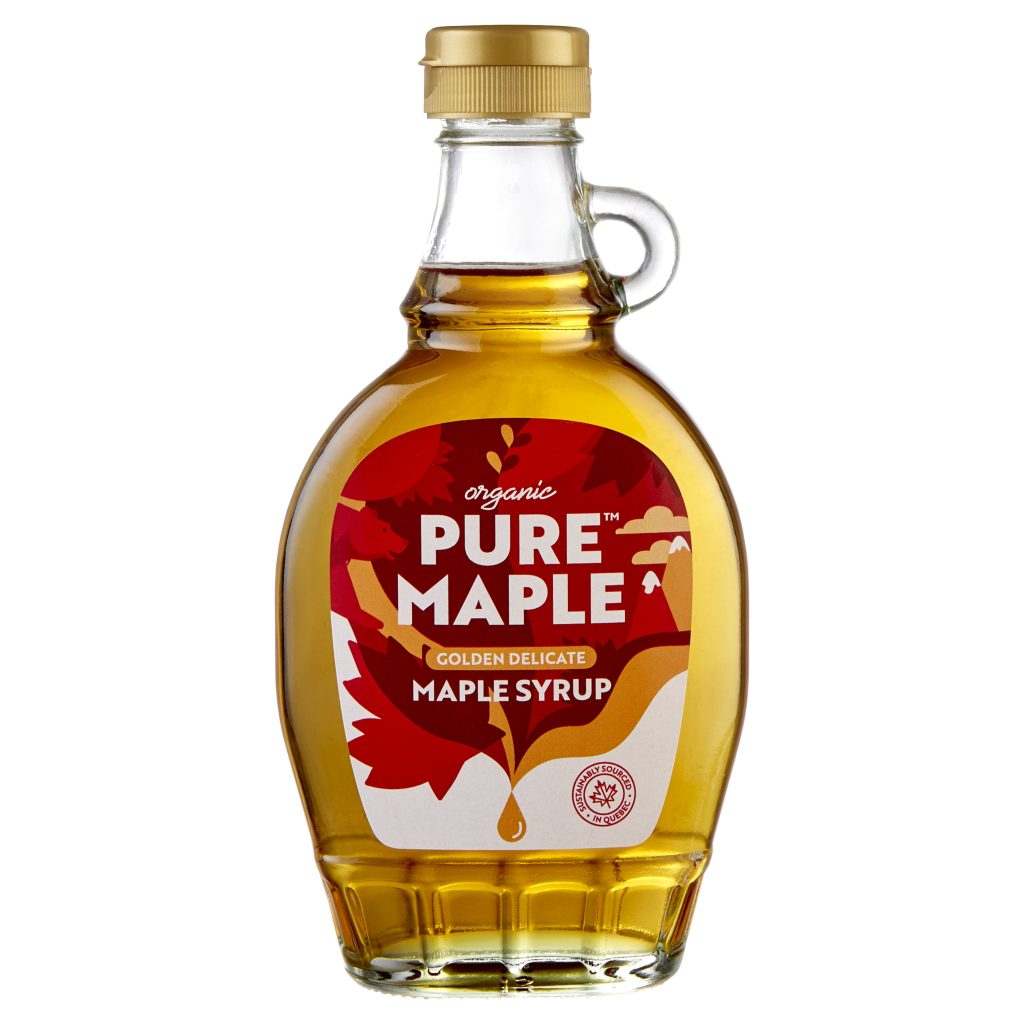
Maple syrup comes from the sap of maple trees. This sap – which is extracted from red, black and sugar maples – contains natural sugars. Maple trees predominantly grow in the US and Canada, as well as in China and Japan.
Production
The process of extracting sap from maple trees is known as tapping. A small hole is drilled into the trunk of a maple tree, before a spout is inserted to collect the substance. The sap is then filtered and boiled to remove excess water until the syrup takes on its distinctive golden brown colour.
In contrast, golden syrup is produced by breaking down sucrose from sugar cane or sugar beet into glucose and fructose. This is done using water, heat and an acid such as lemon juice or citric acid. Commercially, the manufacturing process involves large industrial inversion pans that can hold tonnes of liquid.
Flavour
The two syrups are not a million miles away in terms of flavour, but you can certainly tell them apart.
Maple syrup is often described as more subtle and refined. The hint of caramel is an important characteristic, and some varieties have woody undertones. Golden syrup is milder, and perhaps less complex in its taste.
While golden syrup may vary according to the particular brand or type of sugar that the syrup is derived from, maple syrup is made in several different categories – there are four ‘grades’ in total – each with its own distinctive tang.
Texture
The consistency of maple syrup is smooth and silky. It is free flowing rather than viscous, and this sets it apart from many artificial pancake syrups sold in supermarkets. For this reason, it pours easily from the bottle. Used as a topping, it is light and runny, unlike the gloopy consistency of honey.
Golden syrup is thicker and stickier. It will flow slowly from a bottle or spoon, and as such, is a heavier and denser topping which is more comparable to honey or light corn syrup. It is translucent and glossy, meaning that you won’t find any grains of sugar in the product.
Nutrition
Nutritionally, there is little debate that maple syrup is superior to golden syrup. Not only does it contain more vitamins and minerals, but it also has a lower glycaemic index and sugar content. But while maple syrup can be said to have the greater nutritional profile, both syrups are high in sugar and should be enjoyed in moderation.
Uses
Maple syrup is a much-loved pantry staple, being an ingredient suitable for all manner of home-based treats; including cakes, biscuits and breads. It is also famously used to drizzle over pancakes and a long list of breakfast and dessert items.
Golden syrup is often favoured for commercial baking, because it can withstand high baking temperatures and offers a long shelf life. It is used as an ingredient in cakes, biscuits and pastries. Some people favour it as a topping, pouring it over their morning oats or pancakes.
As we have discovered, two products that may appear similar are actually further apart than you may think!
