
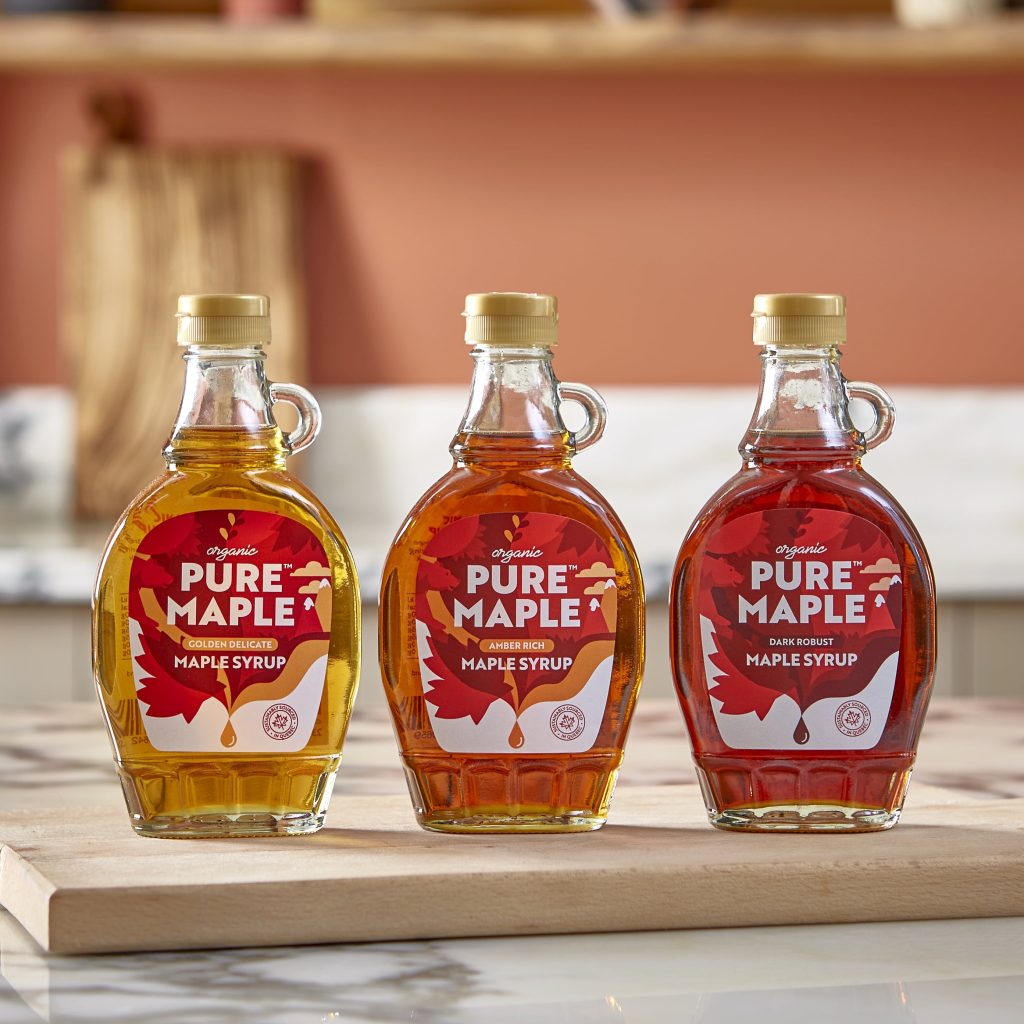
Is maple syrup healthier than honey?
They are both tasty, moreish and positioned as natural alternatives to processed sugar… but which is healthier; maple syrup or honey?
Here are the basics. Maple syrup and honey have been enjoyed for centuries. Another thing they have in common is being produced without artificial ingredients. Also, both should be consumed in moderation as they are concentrated sweeteners.
However, when you line them up side by side, some nutritional differences can be seen. In this article, we consider the nutritional aspects of maple syrup and honey.
Calories & sugar
This appears to be a win for maple syrup, because per tablespoon, maple syrup contains around 52 calories and roughly 12 grams of sugar. Honey, by comparison, delivers approximately 64 calories and closer to 17 grams of sugar in the same serving.
That means that there is a 12-calorie and 5-gram sugar difference in a single tablespoon. If you are a ‘generous drizzler’, this can add up quickly over your morning oats or pancakes.
The key takeaway? For those keeping a close eye on their daily sugar intake, maple syrup is the more forgiving choice; offering genuine sweetness with a lighter nutritional footprint.
Mineral content
Another nutritional area in which maple syrup distinguishes itself from honey.
Pure maple syrup is a rich source of minerals, particularly manganese and zinc. These are two nutrients that honey contains only in negligible amounts. Manganese is essential for healthy metabolism, bone development and sexual function. Zinc plays a key role in immune function, skin health and wound healing.
There is also more riboflavin in zinc, which helps to produce energy from food, and which research has suggested may play a role in preventing migraines and cancer.
Glycemic Index (GI)
The glycemic index (GI) is essentially a ranking system for foods containing carbohydrates that is based on how much they raise blood sugar (blood glucose) levels in comparison. Foods with high GI break down quickly, raising blood sugar to a higher level, whereas low-GI foods break down more slowly for a gradual rise.
Both honey and maple syrup can result in a blood sugar spike. However, between them, maple syrup has a lower glycemic index (54) compared to honey (60). A slower, more gradual rise places less acute demand on the body’s insulin response.
Anyone who is managing diabetes should be cautious about using maple syrup or honey as a sweetener.
Antioxidants
Both maple syrup and honey contain different types of antioxidants.
Maple syrup is packed with polyphenols. These are the same class of plant-based antioxidants that are contained in blueberries, red wine and green tea. Polyphenols have been linked in research to anti-inflammatory benefits and long-term cellular protection.
Honey – especially raw, unprocessed honey (often known as wild honey) – contains its own variety of antioxidants alongside well-documented antibacterial compounds; these include hydrogen peroxide and methylglyoxal.
We might say that the polyphenol content of maple syrup gives it the edge in this category, but the truth is neither sweetener should be relied upon as a primary source of antioxidants.
Best use cases
How do you use your sweeteners? Maple syrup and honey certainly have their own place in cooking and food preparation.
Maple syrup is a star in baking, glazing and cooking. Its clean, caramel-like flavour makes it an ideal sweetener to mix in for recipes, and it holds up well under heat. Think puddings, desserts, biscuits, pancakes, glazes for meats such as pork and chicken, salad dressings and roasted vegetables.
Raw honey, on the other hand, shines in cold applications. It can be easily stirred into tea, drizzled over yoghurt, mixed in with oats, or used as a natural remedy for a scratchy throat – because honey has antibacterial properties (it has been used as a disease treatment for centuries).
A nutritional winner
Both are concentrated sweeteners best enjoyed in moderation. We shouldn’t discount the health benefits that raw honey brings to the table. It is rich in antioxidants, may improve heart health and can even help to combat bacteria.
However, if you’re reaching for a drizzle, pure Canadian maple syrup gives you the most nutritional value for your pour. Consider using it as a sugar substitute in your cooking and baking recipes.
