
What is the difference between maple syrup and honey?
Maple syrup and honey are both popular natural sweeteners, so they make for an interesting comparison.
How are they made? How do they taste? Which is nutritionally superior?
These are all aspects that we’ll cover as we run through the essentials on maple syrup and honey.
An important characteristic the two products share is that they offer more health benefits than natural sugar. Now, let’s take a closer look.
What is maple syrup?
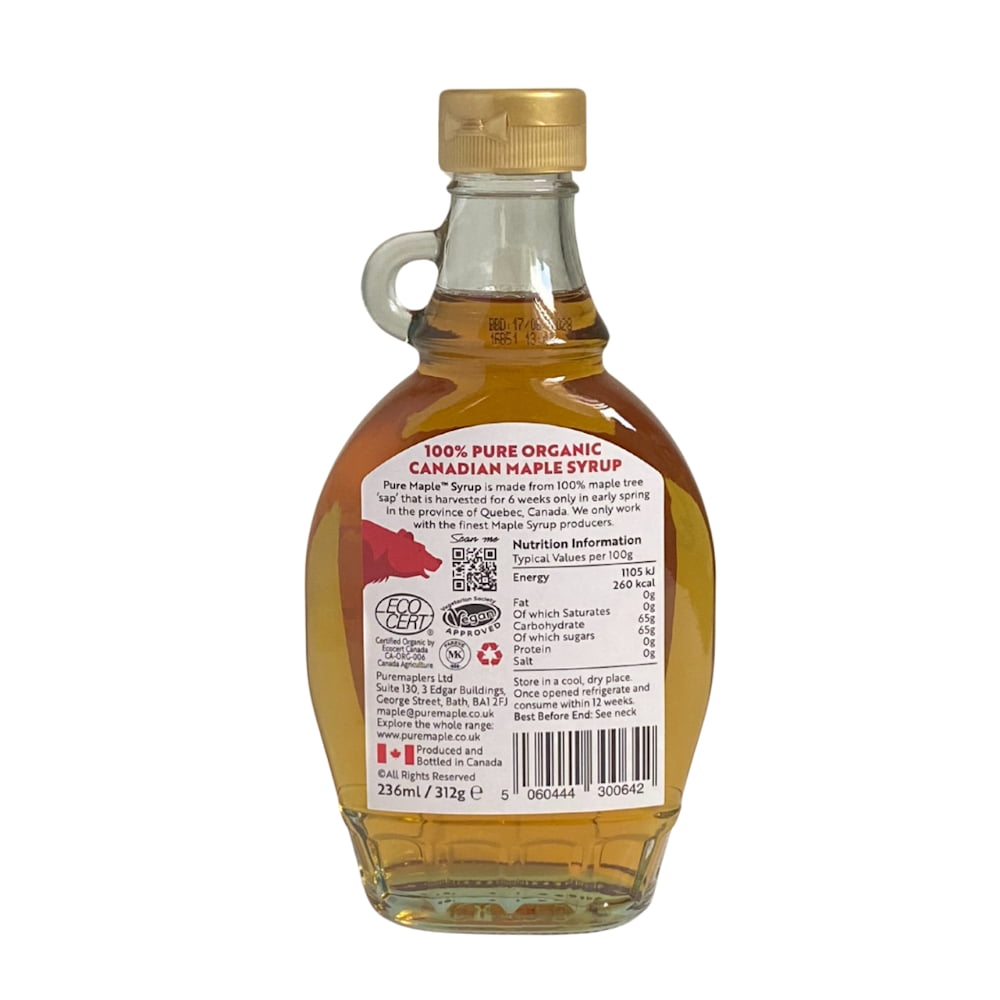
Pure maple syrup is made from a single ingredient: The sap of maple trees.
The typical season for collecting sap – a process that is known as tapping – is spring. After the sap is collected via drilling holes in the maple trees, it is then heated and boiled down to a concentrate.
All the sugars found in maple syrup are natural. When it comes to Canadian maple syrup, national regulations allow no additives or flavourings. Strict rules mean that each bottle of the product contains only 100% maple syrup, and nothing else. Maple syrup is vegan and gluten-free. It is a rich source of numerous vitamins and minerals, including manganese, riboflavin, zinc, magnesium, calcium and potassium.
There are several types of maple syrup. The darker the colour, the more robust the flavour and the more complex the taste.
What is maple syrup commonly used for?
Maple syrup is very versatile and is perhaps most famously used to drizzle as a topping for pancakes and waffles. It is a trusted natural sweetener in baking, marinades and salad dressings. The richness of flavour makes it a good substitute for refined sugar in hot drinks, porridge oats, yogurt, hot drinks and granola.
What is honey?
Honey is produced by bees from flowers. They store the sugary nectar of the plants in honeycombs. Bees act as a ‘converter’ for honey with their natural enzymes. It turns into a thick, golden substance that, like maple syrup, is completely natural.
The colour, flavour and nutritional content of honey vary. That depends on the type of flower the nectar came from.
What is honey commonly used for?
Like maple syrup, honey is one of the world’s most versatile natural products.
It can be used in hot drinks, as a spread, and with fruits. It is also used by cooks in baking and marinades.
Honey even has its place in skincare. It is able to draw moisture into the skin, which is why you can see it as an ingredient in facial masks and lotions. There are potentially some medicinal benefits – honey is a traditional remedy for a sore throat.
Is maple syrup better than honey?
When weighing up the nutritional benefits of maple syrup and honey, we can say that neither is superior, as such; they have different profiles.
Maple syrup has fewer calories, with one tablespoon of maple syrup containing 52 calories, compared to 64 calories in honey. It also has a lower glycemic index, which means a steadier rise in blood sugar. There is also a higher content of some minerals, such as calcium, potassium and zinc.
On the other hand, honey has more B vitamins than maple syrup, including B3, B5, and B6, as well as vitamin C and folate. It also contains higher levels of iron, phosphorus, and copper.
It’s also worth noting that honey is not suitable for vegans, as it’s an animal-derived product. In rare cases, the pollen content in honey may potentially trigger allergies. Raw, unfiltered honey that has not been pasteurised is more likely to have a higher pollen content, as it has not been through the micro-filtration process than mass produced versions have.
Both maple syrup and honey are far better alternatives to refined sugar. The products are both options for a naturally produced sweetener with no additives. Maple syrup might be the preferred choice for those who follow a vegan or plant-based diet, or simply like the depth of flavour.
