
What is the difference between pancake syrup and maple syrup?
You may be forgiven for thinking that pancake syrup and maple syrup are effectively the same. Well, they aren’t at all, so we decided to write an article on the subject.
While pancake syrup and maple syrup might look similar on the shelf, what’s actually inside them couldn’t be more different.
Here we clear up confusion and give you the ‘need to knows’ on pancake syrup and maple syrup.
What is maple syrup?
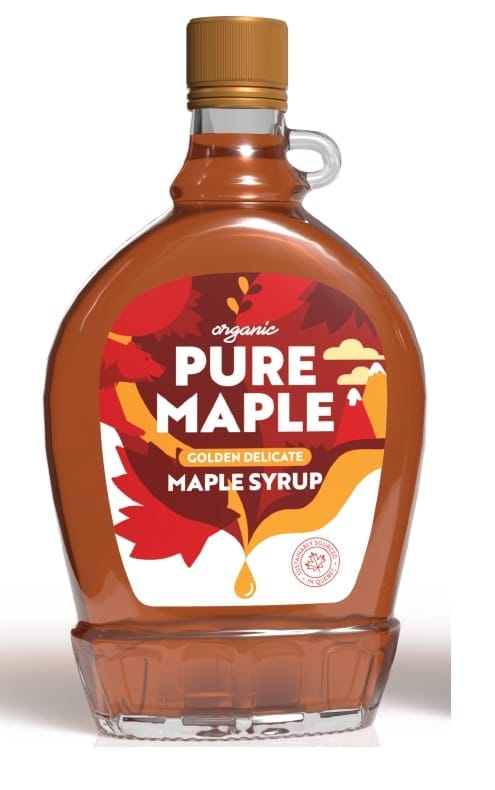
Maple syrup is a 100% natural product that comes from the sap of maple trees. It is sugar maple trees that are most commonly ‘tapped’ for their sap. The tapping takes time and is labour-intensive, despite modern machinery.
Depending on the type of syrup being produced, there is also a short window. ‘Sugaring season’ usually only lasts a month to six weeks. The tapping involves drilling maple trees to access the sap, which at this stage is mostly water. Collected sap is boiled down to a thick concentrate. It takes 40 litres of sap to produce 1 litre of maple syrup.
A stipulation of Canadian maple syrup production – which is part of strict national regulations – is that no additional flavourings, colourings or other ingredients can be added. All you’ll get is pure maple syrup, with all the naturally occurring nutrients it contains.
Maple syrup is mostly produced in Canada, with the state of Quebec accounting for an overwhelming majority. The Northeast of the United States – the state of Vermont in particular – also has a heritage in maple syrup production.
What is pancake syrup?
Now we come on to pancake syrup, which is an entirely different substance altogether.
Pancake syrup – often labelled as maple-flavoured syrup (which can create consumer confusion) – is usually produced from corn syrup. Pancake syrup may have no maple syrup in it at all, or a small percentage. You can check this by reading the ingredient list on the label.
What you can expect are ingredients such as high fructose corn syrup, water and cellulose gum. Essentially, pancake syrup is an artificial, rather than natural, product. Pancake syrup has fewer essential nutrients. It is quite often sold at a lower price point than maple syrup.
Is maple syrup healthier than pancake syrup?
This might be what you came here for – which is the healthier of the two syrups?
The key takeaway is that overall, maple syrup is healthier than pancake syrup, but it still needs to be enjoyed in moderation.
As a completely natural product with many more minerals and antioxidants, maple syrup offers better nutrition than pancake syrup, which does not contain many nutrients. In pancake syrup, most of the calories are ‘empty’ – that is, they have little or no nutritional value.
Did you know that there are no fewer than 67 bioactive natural plant compounds in pure maple syrup, all with potential health benefits? It also has a lower glycemic index than pancake syrup, meaning it causes a steadier rise in blood sugar.
For health-conscious consumers and businesses looking for cleaner ingredients, pure maple syrup is the clear winner.
Can you use pancake syrup as a substitute for maple syrup?
There is nothing to stop you from replacing pancake syrup with maple syrup. It might mimic the taste of the natural product to an extent. Pancake syrup can be a substitute for maple syrup, drizzled on pancakes and waffles, and used for baking.
However, you should remember that the artificial flavour profile of pancake syrup is different from maple syrup; being thinner in texture with a less complex sweetness that some may find too intense. When you try pancake syrup, you might notice the lack of depth compared to genuine Canadian maple syrup.
In cooking and baking, especially, pure maple syrup is hard to replicate. Ultimately, there is no ample substitute for an authentic product. So, if you are looking for that ‘maple syrup taste’, put your faith in the authentic product.
